

Why Summer Feels So Hard for Parents (And What You Can Do About It)
Summer is supposed to be the season of memory-making. You picture slower mornings, popsicles in the backyard, family adventures, and extra time together.
Instead, many parents find themselves wondering:
“Why are my kids fighting so much?”
“Why is everyone so emotional?”
“Why does summer feel harder than the school year?”
If you’ve found yourself breaking up arguments, listening to endless complaints of “I’m bored,” managing meltdowns, or feeling like you’re constantly putting out fires, you’re not alone.
As a child therapist and mom, I see this every single year. Parents enter summer excited and hopeful. A few weeks later, they’re exhausted, frustrated, and wondering what happened.
The good news?
You’re not failing. And your kids aren’t trying to make your life difficult. There’s actually a very real reason summer can feel so challenging.
Why Kids Often Struggle During Summer
Most children thrive on predictability.
During the school year, they know what to expect:
They wake up at roughly the same time.
They know where they’ll be each day.
They know when they’ll eat, learn, play, and rest.
They have clear expectations and routines.
Then summer arrives. Suddenly everything changes. Bedtimes shift. Wake-up times become inconsistent. Schedules disappear. Activities vary from day to day. Kids spend significantly more time with siblings. Parents are often juggling work, childcare, activities, vacations, and household responsibilities. For many children, this loss of predictability can feel overwhelming. Even if they love summer.
The Hidden Connection Between Structure and Behavior
One of the biggest misconceptions I hear from parents is: “My child should be happy. It’s summer!”
But behavior isn’t just about happiness. Behavior is often a reflection of regulation.
When children lose structure, they have to use more mental energy to navigate their day.
They must answer questions like:
What should I do now?
Who gets to choose?
When is screen time?
What happens next?
How do I handle being bored?
Those decisions may seem small to adults, but they add up quickly for children. As demands on their developing brains increase, many children become more irritable, emotional, reactive, and impulsive.
What looks like “bad behavior” is often a child communicating:
“I’m overwhelmed.”
“I don’t know what to do.”
“I need support.”
Why Sibling Fighting Increases During Summer
If you feel like you’re constantly breaking up arguments, you’re in good company. Sibling conflict naturally increases during the summer months because children are spending more time together.
Think about it. They share spaces. They share toys. They share attention. They share activities. And unlike adults, they often lack the communication and problem-solving skills needed to navigate disagreements successfully.
Many parents find themselves playing referee all day long.
Who had it first?
Who’s right?
Who’s wrong?
Who needs to apologize?
While this approach may stop the conflict temporarily, it doesn’t teach children the skills they need to handle future disagreements independently.
The Goal Isn’t a Perfect Summer
One of the biggest mistakes parents make is believing that a successful summer means no conflict.
That’s simply not realistic. Conflict is normal. Disappointment is normal. Frustration is normal. Arguments are normal. The goal isn’t to eliminate every difficult moment. The goal is to help your family navigate those moments differently.
When parents understand what’s driving behavior, create simple structures that support regulation, teach communication and problem-solving skills, and know how to respond effectively during hard moments, everything begins to feel more manageable.
Not perfect. But manageable. And often much more enjoyable.
What Families Actually Need During Summer
After working with children and families for more than a decade, I’ve found that most summer struggles improve when parents focus on five key areas:
1. Understanding Behavior
Children’s behavior makes more sense when we understand what’s happening underneath it.
2. Creating Predictability
Kids don’t need every minute planned.
They do need some structure.
3. Teaching Problem-Solving Skills
Children are more successful when they learn how to work through disagreements instead of relying on adults to solve every problem.
4. Preventing Meltdowns Before They Happen
Most emotional explosions leave clues before they occur.
5. Repairing After Hard Moments
No parent handles every situation perfectly.
Repair matters more than perfection.
A Sneak Peek Inside Fight-Free Summer
These five areas became the foundation for my Fight-Free Summer program.
Inside the course, parents receive practical video lessons, printable activities, worksheets, scripts, and tools designed to help families reduce conflict and build stronger relationships throughout the summer.
One of my favorite resources is the Summer Rhythm Planner, which helps families create enough predictability to support children without turning summer into a rigid schedule.
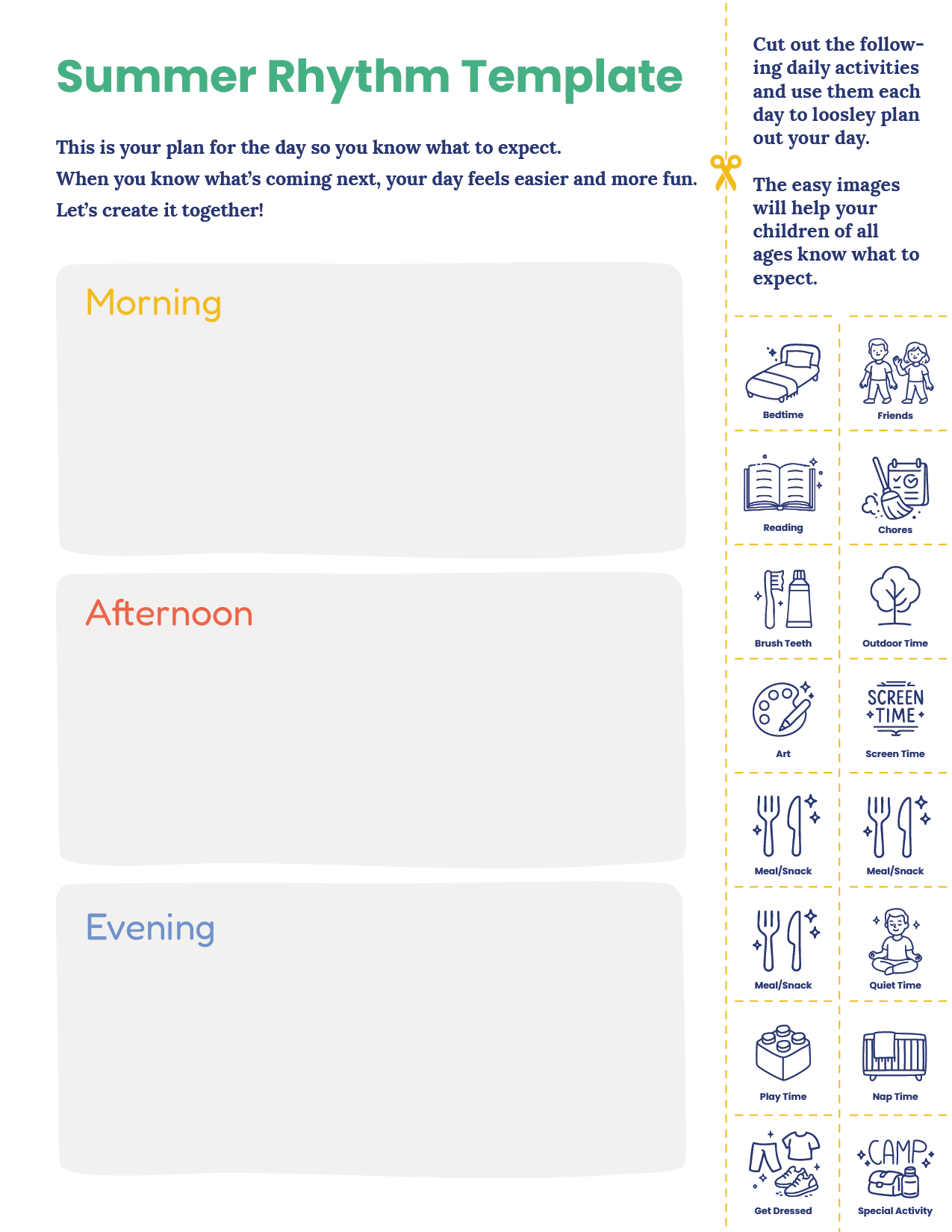
Because kids don’t need a perfectly planned summer. They need a rhythm they can count on.
The Summer You Actually Want Is Possible
If summer has started to feel more stressful than fun, take a deep breath. You are not alone. You are not failing. And you don’t need to spend the next few months stuck in survival mode. Small changes can make a big difference.
The skills your family builds this summer can reduce conflict, strengthen relationships, and create more opportunities for connection—not just now, but throughout the year.
If you’d like additional support, the Fight-Free Summer program walks you through each of these skills step-by-step with practical tools you can start using immediately.
Because summer shouldn’t feel like something you have to survive.
It should be something you get to enjoy.
Ready for a Calmer Summer?
Learn more about the Fight-Free Summer program and discover the tools that are helping families reduce conflict, build communication skills, and create more connection at home.
My Favorite Family Finds
TINCAN Phones for Kids
A screen-free way for kids to build communication skills and independence. Communication Without Screens!
Screen-Free Favorites
Easy activities and products that encourage creativity, play, and connection.
Summer Survival Must-Haves
Simple tools helping our family navigate summer routines, boredom, travel, and big emotions.
ShopMy Favorites
All my favorite mom finds, parenting tools, home favorites, and everyday essentials.
My Amazon Storefront
Browse my favorite parenting, organization, sensory, travel, and kid-friendly finds.
Affiliate Disclaimer: This email may contain affiliate links. If you purchase through these links, I may earn a small commission at no extra cost to you. Thank you for supporting my work and allowing me to continue creating resources for families.
