

Summer Routine Ideas for Kids: Why You Don’t Need a Schedule (You Need a Rhythm)
One of the most common things I hear from parents every summer is: “My kids are driving me crazy.”
Not because they’re bad kids. Not because they’re trying to make life difficult. But because somewhere between breakfast and lunch, parents find themselves answering:
“What can I do?”
“I’m bored.”
“Can I have a snack?”
“Can I have screen time?”
“Mommmm…”
About 47 times.
If you’ve ever felt like it’s suddenly your job to entertain your children all day long, you’re not alone.
Summer can feel exhausting. Many parents start June excited for slower days, only to realize that having less structure often creates more chaos.
The good news?
You don’t need a color-coded schedule. You don’t need to fill every minute with activities.
And you definitely don’t need to become your child’s cruise director. What your family needs is a rhythm.
Why Kids Struggle With Too Much Freedom
As adults, freedom feels relaxing. As children, too much freedom can feel overwhelming.
Children thrive when they know:
What’s happening next
What is expected of them
When they can count on connection
When they can rest
When they can play
When those anchors disappear, children often become:
More emotional
More demanding
More bored
More argumentative
More dependent on parents for entertainment
This isn’t because they’re lazy. It’s because predictability helps children feel safe. When children know what to expect, they spend less energy trying to figure out what’s next and more energy engaging in play, creativity, and learning.
The Myth of the Perfect Summer Schedule
Some parents respond to summer chaos by creating highly structured schedules.
Every hour is planned. Every activity is organized. Every moment has a purpose. And for about three days, it works. Then real life happens. Plans change. Friends call. Appointments come up. Kids resist. Parents get tired. The schedule falls apart. That’s why I don’t teach strict schedules. I teach rhythms.
What’s the Difference Between a Schedule and a Rhythm?
A schedule tells your child exactly what to do at specific times. A rhythm provides predictable anchors throughout the day.
For example
Instead of:
9:00 Art Project
9:30 Reading
10:00 Outside Play
10:30 Snack
You might create a rhythm that looks like:
Morning Routine
Movement
Independent Play
Lunch
Quiet Time
Connection Time
Evening Routine
The exact activities can change.
The flow stays consistent.
This creates flexibility for parents and predictability for children.
Why Rhythms Reduce Conflict
When children know what comes next, many power struggles disappear.
Think about how often kids ask:
When can I have a snack?
Can I watch TV now?
What are we doing today?
When can I play with friends?
A predictable rhythm answers those questions before they’re asked. It reduces uncertainty. And uncertainty is often a major source of challenging behavior.
One of My Favorite Summer Strategies
One of my favorite rhythm anchors is something I call Connection Before Correction. Before asking children to clean, transition, share, cooperate, or solve problems, spend a few minutes connecting.
Read together.
Play a quick game.
Talk while eating a snack.
Shoot hoops.
Take a walk.
Connection fills a child’s emotional cup. And connected children generally cooperate more than disconnected children.
A Sneak Peek Inside Fight-Free Summer
One of the most popular resources inside the program is my Summer Rhythm Planner.
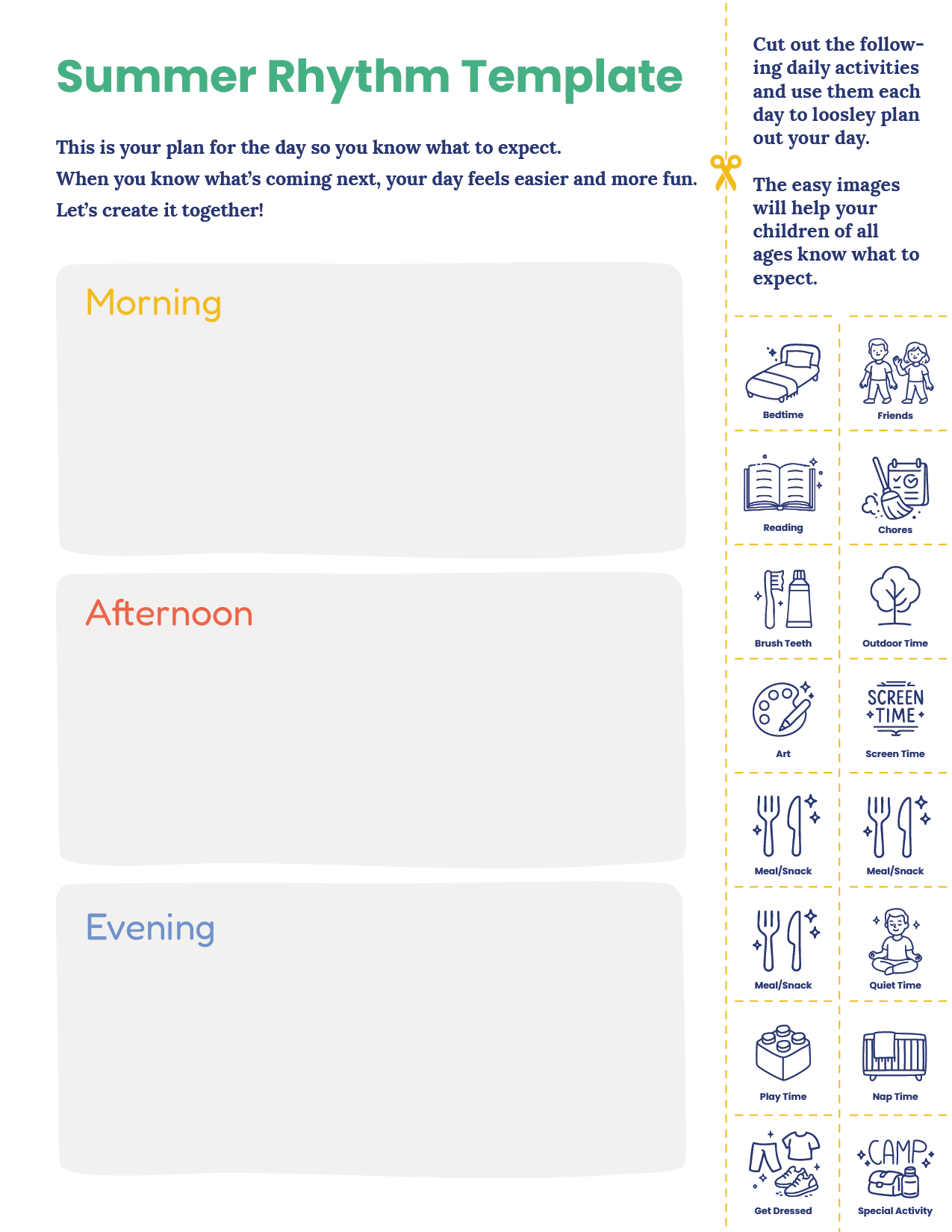
This simple tool helps parents create:
Daily anchors
Predictable routines
Flexible structure
Independent play opportunities
Connection moments
Without creating a rigid schedule that nobody wants to follow. Parents often tell me this worksheet immediately reduces stress because it removes the constant question of:
“What should we do now?”
The Goal Isn’t Keeping Kids Busy
Let’s be honest. No parent can entertain children all day. And that’s not the goal.
The goal is helping children develop the skills to:
Play independently
Tolerate boredom
Be creative
Solve problems
Follow routines
Manage downtime
Those are lifelong skills. And summer is the perfect time to practice them.
What If Summer Felt More Predictable?
Imagine waking up without wondering how you’re going to survive the day. Imagine fewer complaints of boredom. Imagine children who know what to expect and spend less time arguing about what’s next.
Imagine feeling like a parent instead of an event planner. That’s what a rhythm creates. Not perfection.
Not a conflict-free summer. Just more calm, more predictability, and more opportunities for connection.
Ready to Create a Summer Rhythm That Works?
Inside Fight-Free Summer, you’ll learn how to build a simple summer rhythm that reduces power struggles, supports emotional regulation, and helps your family enjoy summer again.
Plus, you’ll get access to the Summer Rhythm Planner and other therapist-created tools designed specifically for real families.
My Favorite Family Finds
TINCAN Phones for Kids
A screen-free way for kids to build communication skills and independence. Communication Without Screens!
Screen-Free Favorites
Easy activities and products that encourage creativity, play, and connection.
Summer Survival Must-Haves
Simple tools helping our family navigate summer routines, boredom, travel, and big emotions.
ShopMy Favorites
All my favorite mom finds, parenting tools, home favorites, and everyday essentials.
My Amazon Storefront
Browse my favorite parenting, organization, sensory, travel, and kid-friendly finds.
Affiliate Disclaimer: This email may contain affiliate links. If you purchase through these links, I may earn a small commission at no extra cost to you. Thank you for supporting my work and allowing me to continue creating resources for families.
