

How to Prepare Your Child for Back-to-School: Start with These 3 Nights
The first week of school can feel like a whirlwind!
New teachers.
Earlier bedtimes.
Busy mornings.
New expectations.
Even children who are excited about going back to school often struggle with the transition because so many parts of their daily routine change all at once.
The good news? You don’t have to wait until the night before school starts to prepare.
One of the simplest—and most effective—ways to help your child feel confident and calm is to practice your school routine for three consecutive days before the first day of school.
As a child therapist, this is one of my favorite back-to-school strategies because it helps children adjust before the pressure is on.
Why Three Days Makes Such a Difference
Children thrive on predictability. Their brains feel safer when they know what comes next.
When bedtime suddenly moves earlier, alarms start ringing, and mornings become rushed overnight, it asks a lot of their developing nervous system.
Practicing the routine ahead of time allows your child’s brain and body to adjust gradually instead of all at once.
You’re not just practicing logistics. You’re building confidence.
Instead of wondering, “Can I do this?” your child begins thinking, “I’ve already done this.”
That confidence carries into the first day of school.
What to Practice During Your Three-Night Routine
Don’t worry about making it perfect. You’re simply helping your child become familiar with the rhythm of a school day. Here’s what I recommend practicing.
1. Shift Bedtime Gradually
If summer bedtime has drifted later, move bedtime back by 15–20 minutes each night until you reach your school-year schedule. A gradual adjustment is much easier than asking your child to fall asleep an hour earlier all at once.
2. Wake Up at School Time
Yes—even if school hasn’t started yet. This helps reset your child’s internal clock and makes those first mornings much less of a shock.
Bonus: open the blinds, eat breakfast near a window, or spend a few minutes outside. Morning sunlight helps regulate your body’s natural sleep-wake cycle.
3. Practice the Morning Routine
Pretend it’s a real school day.
Have your child:
Get dressed.
Brush teeth and hair.
Eat breakfast.
Pack their backpack.
Put on shoes.
Head out the door (even if it’s just for a walk around the block).
Children learn through repetition. The goal isn’t speed—it’s familiarity.
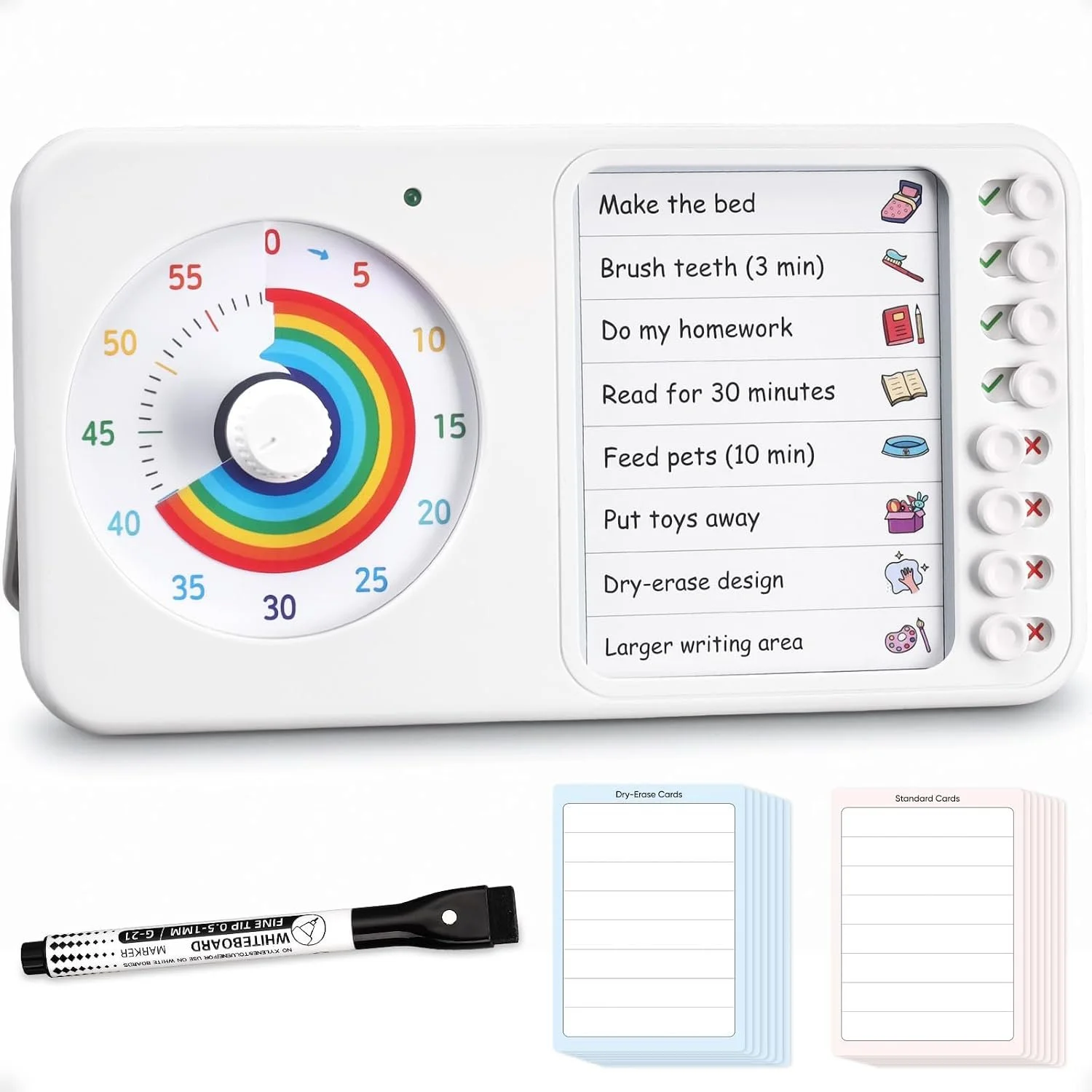
This is one of my favorite 2-in-1 visual timers for kids! It is a great visual reminder of what comes next and how much time they have left before school.
4. Let Your Child Practice Independence
Back-to-school is the perfect time to identify small tasks your child can begin doing independently.
Depending on their age, this might include:
Choosing tomorrow’s outfit.
Packing their backpack.
Filling their water bottle.
Making part of their lunch.
Setting their own alarm.
These small responsibilities build competence and confidence.
5. End the Day with Connection
Children often feel mixed emotions before school starts.
Excitement.
Nervousness.
Sadness that summer is ending.
Rather than trying to fix those feelings, create space to talk about them.
At bedtime, ask:
What are you looking forward to?
What feels a little hard?
Is there anything you’re wondering about?
Sometimes children don’t need answers. They just need to know someone is listening.
What Parents Can Do
Preparing for school isn’t just about backpacks and supplies. It’s about helping your child’s nervous system adjust to a new rhythm.
As you practice your five-night routine:
Keep expectations realistic.
Celebrate effort instead of perfection.
Expect a few bumps along the way.
Stay calm when things don’t go as planned.
Remember, you’re practicing—not performing. Every morning is simply another opportunity to learn.
Parenting Scripts
Children often need reassurance more than solutions.
Instead of saying: “You already know how to get ready.”
Try:“Let’s practice together so your first day feels easier.”
Instead of: “You need to hurry!”
Try: “What’s the next thing your body needs to do?”
Instead of: “Don’t worry about school.”
Try: “It’s okay to have excited feelings and nervous feelings at the same time.”
Instead of: “We’ll figure it out when school starts.”
Try: “Let’s practice now so your brain already knows what to expect.”
Therapist Tip
Parents often assume the first day of school is the most important day to prepare for.
I disagree.
The three days before school starts are where the magic happens.
Those quiet practice mornings build confidence, reduce anxiety, and create predictability before the pressure of a real school day arrives. A little preparation now can make the entire first week feel calmer—for both you and your child.
My Favorite Family Finds
TINCAN Phones for Kids
A screen-free way for kids to stay connected while building communication skills and independence. Communication without screens!
Camp Snap Screen-Free Camera: Use code: KATIE-P7 for 7% off your order!
A fun, screen-free camera kids can use to capture their own adventures, vacations, school-year moments, and everyday memories—without handing them a phone.
Time Timer
One of my favorite visual tools for helping kids see how much time is left. Great for morning routines, homework, getting out the door, screen-time transitions, clean-up, and more.
My Back-to-School Favorites
All the things I love for making the school year run a little smoother—from lunch and organization favorites to routine helpers, kid essentials, and tools we actually use at home.
ShopMy Favorites
Shop all my favorite mom finds, parenting tools, home favorites, kids’ essentials, and everyday products I love and recommend.
My Amazon Storefront
Browse my favorite parenting tools, organization finds, sensory products, kids’ essentials, travel favorites, and everyday family must-haves.
Affiliate Disclaimer: This post may contain affiliate links. If you purchase through these links, I may earn a small commission at no extra cost to you. Thank you for supporting my work and helping me continue creating resources for kids and families.
