

How to Emotionally Prepare Your Child for Back to School
Back-to-school preparation usually looks something like this:
Buy the school supplies.
Pick out a backpack.
Figure out who the teacher is.
Practice the morning routine.
Talk about what to pack for lunch.
All of those things are helpful. But there’s another part of back-to-school preparation that we sometimes forget: Preparing kids for how the beginning of a new school year might feel.
Starting school is a big transition—even for kids who like school. A child can be excited to see their friends and nervous about their new teacher. They can be ready for summer to end and sad that it’s over. They can know exactly where their classroom is and still feel butterflies walking through the door. One of the best things we can do before the first day of school is help kids understand that all of those feelings are normal.
Back-to-School Feelings Aren’t Always Obvious
When we imagine a child who is nervous about school, we might picture a child saying: “I’m nervous about school.” But kids don’t always communicate their emotions that clearly.
Instead, you might notice:
More arguing or irritability
Trouble falling asleep
Increased clinginess
Complaints about stomachaches or headaches
More questions about school than usual
Wanting to know every detail of the first day
Saying they don’t want to go to school
Getting upset over things that normally wouldn’t bother them
Difficulty with separation
Suddenly worrying about their teacher, friends, lunch, recess, or schoolwork
Sometimes what looks like difficult behavior is actually a child communicating: “Something feels different, and I’m not sure what to expect.” That doesn’t mean we need to make every behavior about school or assume every child is anxious. It simply means that as school approaches, it’s worth remembering that transitions can bring big feelings with them.
Don’t Try to Talk Kids Out of Their Feelings
When our kids tell us they’re worried, our instinct is often to reassure them.
“There’s nothing to worry about!”
“You’re going to have so much fun!”
“You already know kids in your class.”
“Your teacher is going to be great.”
We’re trying to help. But sometimes reassurance accidentally sends the message that our child’s uncomfortable feeling isn’t supposed to be there. Instead of convincing kids not to feel nervous, we can teach them: It’s okay to feel nervous and still do something new.
Try saying: “It makes sense that you have some butterflies. Starting a new school year is a big change.”
Or: “You can be excited about school and nervous about school at the same time.”
Or simply: “You don’t have to get rid of that feeling. We can figure out what will help you feel ready.”
This is an important emotional skill that reaches far beyond the first day of school. We’re teaching kids that uncomfortable emotions aren’t emergencies. They are feelings we can notice, understand, and move through.
Talk About All the Feelings That Might Show Up
Instead of asking: “Are you nervous about school?”
Ask: “When you think about going back to school, what feelings show up?”
If your child isn’t sure, offer possibilities. “Some kids feel excited. Some feel nervous. Some are disappointed summer is ending. Some wonder who they’ll play with. Some feel a little bit of everything. What about you?”
Younger children may benefit from naming the feelings together: Excited. Nervous. Curious. Sad. Happy. Unsure. Shy. Disappointed. Proud.
The goal isn’t to find the one “correct” emotion. The goal is to communicate: Whatever you’re feeling, we can talk about it.
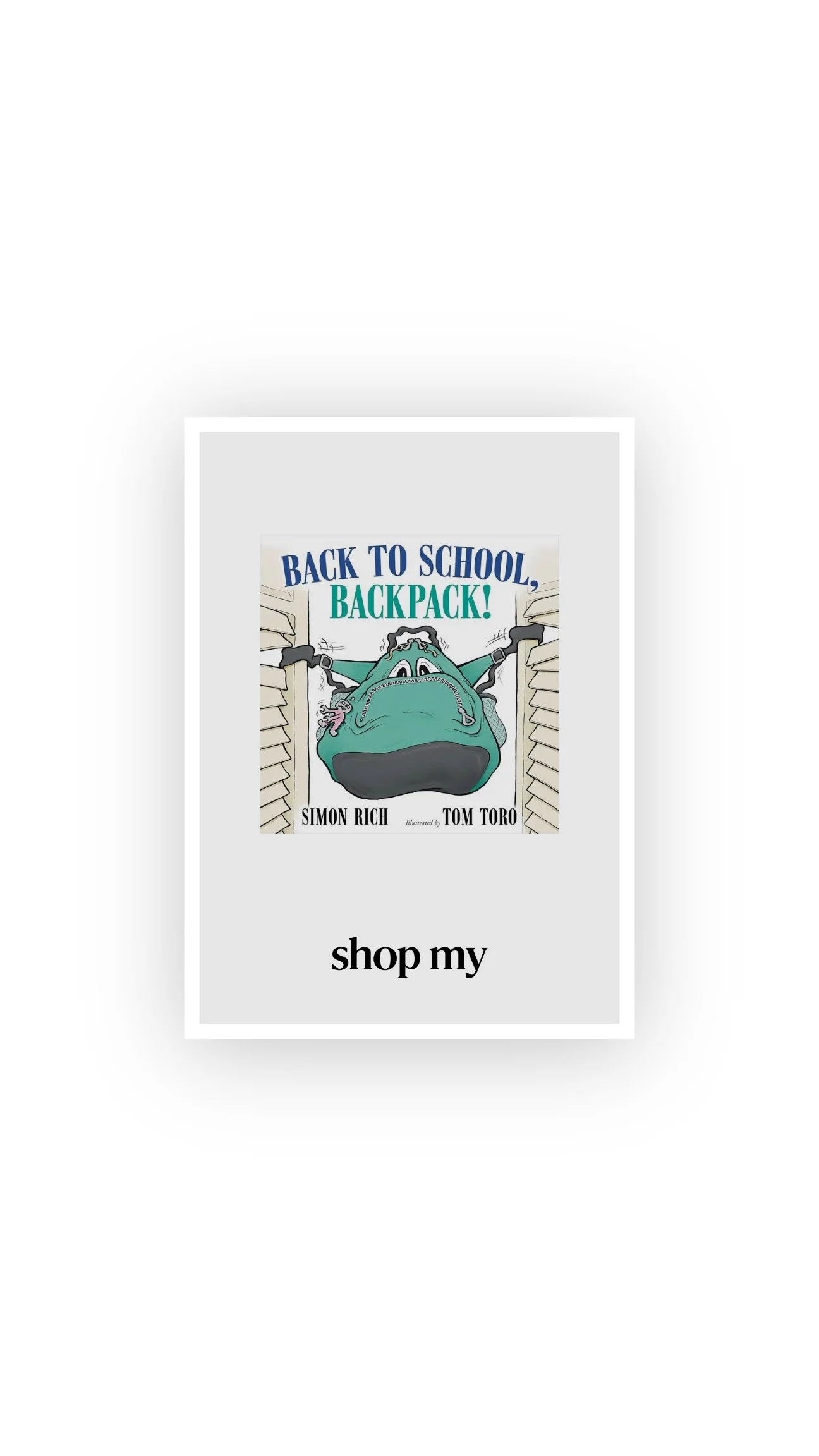
Shop my favorite back-to-school books and supplies here!
Get Curious About What’s Underneath the Worry
If your child tells you they’re nervous, resist the urge to immediately fix it. Get curious first.
You might ask:
“What part feels the hardest?”
“Is there something you’re wondering about?”
“What do you wish you knew about the first day?”
“Is there anything you’re hoping happens?”
“Is there anything you’re hoping doesn’t happen?”
A child who says, “I don’t want to go to school,” may actually be thinking:
What if I don’t know anyone in my class?
What if I can’t find the bathroom?
What if my teacher is strict?
Who will I sit with at lunch?
What if the work is too hard?
Once we understand the actual worry, we can help kids determine whether it’s something we can prepare for, problem-solve, or simply acknowledge.
Separate “What We Know” From “What We Don’t Know Yet”
Uncertainty is one of the hardest parts of starting a new school year. Kids may not know exactly who will be in their class, what their teacher will be like, where they’ll sit, what they’ll do first, or who they’ll play with.
Instead of trying to provide answers we don’t have, help kids separate what they know from what they don’t know yet.
For example:
What we know:
Your teacher’s name.
Where your classroom is.
How you’ll get to school.
Who will pick you up.
What your morning will look like.
What we don’t know yet:
Where you’ll sit.
Who you’ll play with at recess.
Exactly what your teacher will be like.
What you’ll do first.
Then remind them: “We don’t have to know everything before the first day. Some things we’ll figure out when we get there.”
This helps kids practice tolerating uncertainty instead of trying to eliminate it.
Make a Plan for the Hard Moments
We can’t promise kids that the first day will feel easy. Instead, we can help them know what to do if something feels hard.
Ask: “If you start feeling nervous at school, what could you do?”
Their plan might include:
Take three slow breaths
Get a drink of water
Ask the teacher a question
Find a familiar friend
Use a coping statement
Remember what happens after school
Tell an adult if they need help
You can also help them choose a simple phrase to remember:
“I can feel nervous and still do this.”
“I don’t have to know everything yet.”
“I can ask for help.”
“My grown-up always comes back.”
“I can do new things one step at a time.”
The goal isn’t to create a complicated coping plan. It’s to give your child one or two tools they can access when you’re not standing beside them.
Remember: Excitement and Anxiety Can Look Similar
The night before school, your child might have trouble sleeping. They may talk nonstop. They might ask the same question ten times. They may suddenly decide they don’t like their backpack. They might become emotional over something that seems completely unrelated. Before assuming something has gone wrong, remember: Their nervous system is preparing for something big. Excitement and anxiety can feel very similar in the body. Both can bring butterflies, extra energy, difficulty sleeping, racing thoughts, or the feeling that you just can’t settle down. Sometimes kids don’t need us to solve anything.
They need us to recognize: “Your body has a lot of energy tonight. Tomorrow is a big day.”
Keep the First Week Expectations Realistic
Emotional preparation shouldn’t stop once your child walks through the school doors.
The first several days of school require kids to process a lot:
New routines.
New expectations.
New classmates.
New teachers.
New schedules.
More noise.
More transitions.
More social interaction.
More self-control.
Even kids who appear completely fine at school may come home exhausted, irritable, emotional, or unusually quiet. Try to keep afternoons and evenings relatively predictable during the first week when possible.
Offer food.
Give them some downtime.
Don’t require an immediate play-by-play of their day.
Remember that a difficult afternoon doesn’t necessarily mean they had a terrible day at school.
Sometimes it simply means: They worked really hard all day to hold it together.
What Kids Need to Hear Before the First Day
As you prepare for school, talk about backpacks and teachers and morning routines. But make room for the emotional preparation too. Your child doesn’t need to walk into school feeling 100% confident. They don’t need you to convince them that nothing will be hard.
They need to know:
It’s okay to feel nervous.
It’s okay to miss home.
It’s okay to be excited.
It’s okay if the first day feels a little uncomfortable.
It’s okay not to know exactly what to expect.
You can have a hard moment and still have a good day.
And most importantly: Whatever happens, we can figure it out together.
Preparing kids emotionally for school isn’t about getting rid of the butterflies. It’s about helping them understand what those butterflies mean—and giving them confidence that they can handle what comes next.
My Favorite Family Finds
TINCAN Phones for Kids
A screen-free way for kids to stay connected while building communication skills and independence. Communication without screens!
Camp Snap Screen-Free Camera: Use code: KATIE-P7 for 7% off your order!
A fun, screen-free camera kids can use to capture their own adventures, vacations, school-year moments, and everyday memories—without handing them a phone.
Time Timer
One of my favorite visual tools for helping kids see how much time is left. Great for morning routines, homework, getting out the door, screen-time transitions, clean-up, and more.
My Back-to-School Favorites
All the things I love for making the school year run a little smoother—from lunch and organization favorites to routine helpers, kid essentials, and tools we actually use at home.
ShopMy Favorites
Shop all my favorite mom finds, parenting tools, home favorites, kids’ essentials, and everyday products I love and recommend.
My Amazon Storefront
Browse my favorite parenting tools, organization finds, sensory products, kids’ essentials, travel favorites, and everyday family must-haves.
Affiliate Disclaimer: This post may contain affiliate links. If you purchase through these links, I may earn a small commission at no extra cost to you. Thank you for supporting my work and helping me continue creating resources for kids and families.
