

How to Help Your Child With Separation Anxiety at School Drop-Off
The backpack is packed.
Lunch is ready.
Shoes are on.
You made it to school on time.
And then you get to the classroom door…“Don’t leave!”
Suddenly your child is holding onto your leg, crying, asking you to stay, or telling you they don’t want to go to school. School drop-off can be incredibly hard when your child struggles with separation. And as a parent, it’s natural to want to make that feeling go away. We might offer one more hug. Stay for another minute. Promise that there’s nothing to worry about. Try to convince them how much fun they’re going to have. Or sneak away the second they’re distracted because we don’t want to make them cry again. But when kids are struggling with separation, one of the most helpful things we can give them isn’t a perfect goodbye. It’s a predictable one. Here’s how you can help your child feel safer and more confident with school separation.
First, Understand What Separation Anxiety Is Communicating
For young children especially, separating from a parent is a big emotional task. Your child may know they’re safe at school. They may love their teacher. They may have friends they’re excited to see. And they can still have a hard time watching you leave. Those things can exist at the same time.
A child crying at drop-off doesn’t necessarily mean they dislike school or aren’t ready to be there.
Sometimes the hardest part of school is simply the transition from being with you to being without you.
That’s an important distinction. Because if we focus all of our attention on the difficult goodbye, we can accidentally make the transition feel even bigger. Instead, we want to help children move their attention toward something that comes after the goodbye.
Focus on What They Love About School—Not Just the Separation
When a child is worried about drop-off, it’s easy for the entire morning to become about drop-off.
“Remember, Mommy has to leave today.”
“You’re going to be okay when I leave.”
“Are you going to cry today?”
“Remember what we talked about if you miss me.”
Even though we’re trying to prepare them, we’re spending a lot of time reinforcing:
Something difficult is about to happen. Instead, shift the conversation toward what your child is moving toward, rather than what they’re separating from.
On the drive to school, try:
“What center do you hope is open when you get there?”
“I wonder if you’ll get to play outside today.”
“Who are you excited to see?”
“What do you hope you get to do at school today?”
“Do you think you’ll paint today?”
For an older child, it might be:
“What are you looking forward to at recess?”
“Who do you hope you sit by at lunch?”
“What class are you most excited about today?”
We’re not pretending the separation isn’t difficult. We’re simply helping their brain remember: There is something good waiting for me on the other side of this goodbye.
Create a Goodbye Routine
One of my favorite strategies for separation anxiety is creating a short, predictable goodbye routine. Kids do well when they know what comes next. Instead of having a different goodbye every morning—or stretching the goodbye longer when your child becomes upset—decide together what your goodbye will look like. Keep it simple.
For example:
Hug. Kiss. Special phrase. Walk inside.
Maybe your routine is:
One big hug.
Two kisses.
Then: “Something great is going to happen today. I love you. I’ll see you after school.”
Then you leave.
Your goodbye phrase could be something as simple as: “I love you. You’re safe. I’ll see you after school.”
Or: “You go have your day, and I’ll go have mine. Then we’ll be together again.”
The exact words matter less than the predictability. When you repeat the same routine every day, your child begins to learn:
This is how goodbye happens.
Mom/Dad leaves.
I go into school.
And Mom/Dad comes back.
Try Not to Make the Goodbye Longer and Longer
This is one of the hardest parts. Your child cries. You give another hug. They cry harder. You stay another minute. They ask you not to leave. You reassure them again. Before you know it, a 30-second goodbye has turned into ten minutes. It makes sense that parents do this. Walking away from an upset child is hard. But extending the goodbye doesn’t always make separation easier. Sometimes it teaches the child’s brain: Maybe if I keep asking, Mom or Dad might stay.
Instead, try to be warm, loving, confident, and consistent. “I know you want me to stay. It’s hard to say goodbye. I love you, and I’ll see you after school.” Then follow your goodbye routine. Your confidence communicates something important: I trust you. I trust your teacher. And I know you can do this.
Don’t Sneak Away
It can be tempting. Your child finally starts playing. They’re distracted.
You think: If I can just get out the door without them noticing, we can avoid the tears. But sneaking away can make separation harder for some children because they start wondering: When is my parent going to disappear? Instead, let your child experience a clear goodbye. You can keep it short. You don’t have to wait until they’re completely happy. But allow them to know that you’re leaving. This helps build trust and predictability over time.
Use a Transitional Object
Some kids benefit from having something tangible that reminds them of their connection to you. This is sometimes called a transitional object.
It could be:
A small family photo tucked into their backpack
A note in their lunchbox
A tiny heart drawn on their hand
A special keychain
A small comfort item, if allowed at school
Matching bracelets you both wear
The object isn’t meant to convince your child that they shouldn’t miss you. Instead, it becomes a reminder: We’re still connected even when we’re apart.
You can tell your child: “If you miss me today, you can look at this and remember that I’m thinking about you too.”
A Separation Tool I Love: Little Words Project
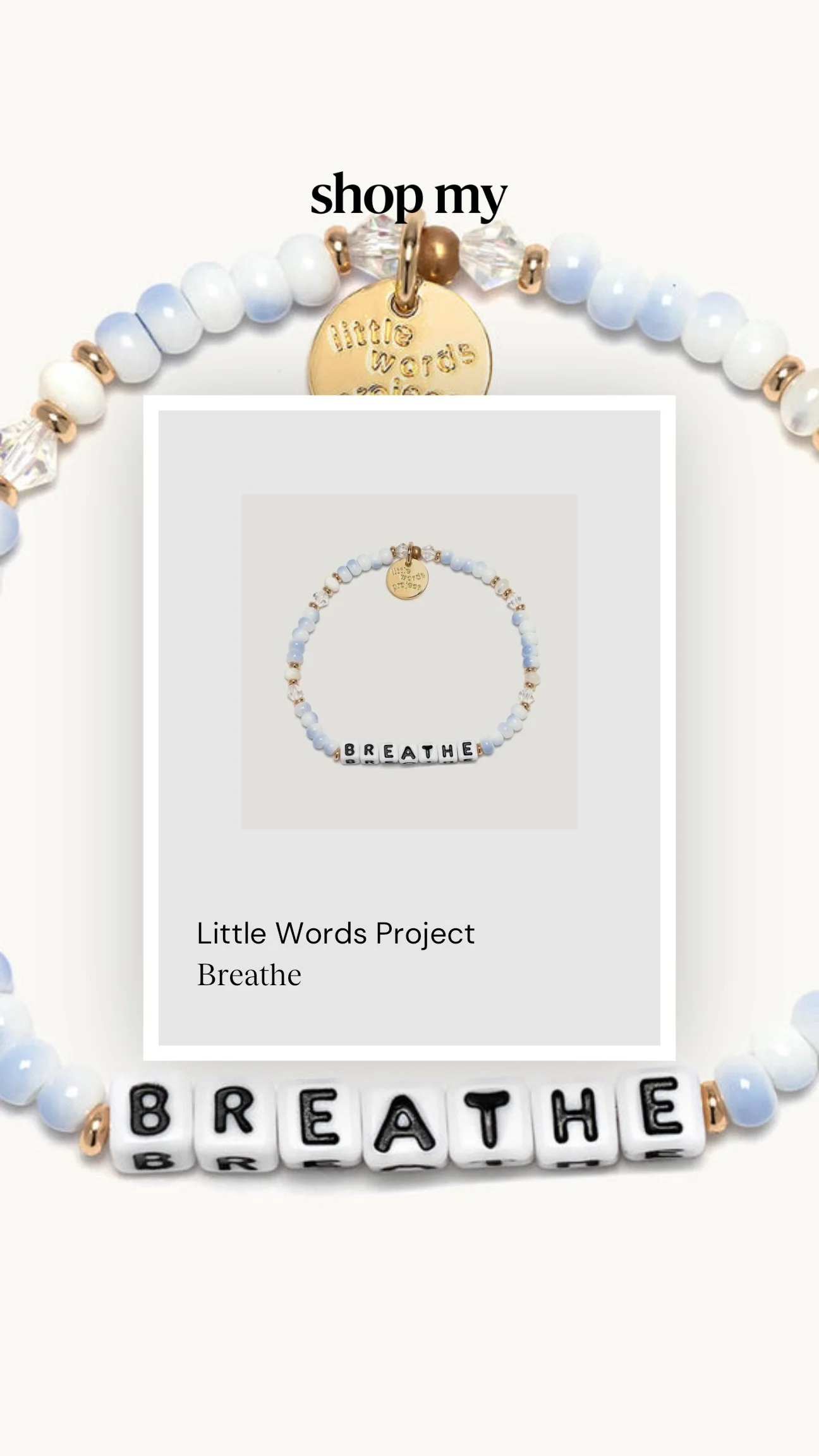
One sweet option for kids who like having a physical reminder of their parent is matching bracelets.
Little Words Project has bracelets for adults and kids, and you can even customize your own.
You could choose matching words that mean something to your family—or create a simple phrase that reminds your child of what you want them to remember while you’re apart.
Some ideas:
BRAVE
LOVED
I CAN
YOU GOT THIS
TOGETHER
Or choose a word or phrase that’s completely unique to your family. Before school, you might say: “We both have our bracelets today. If you miss me, look at yours and remember I’m wearing mine too. We’re connected even when we’re not in the same place.” It’s a small, tangible way to reinforce the bigger message we’re trying to teach: I can miss someone and still be okay while we’re apart.
Give Them a Concrete Point of Reunion
“Later” can feel very abstract to a young child.
Instead of saying: “I’ll be back later.” Connect your return to something they understand.
“You’ll have morning meeting, centers, lunch, recess, and then after school I’ll be here to get you.”
For younger kids, you might say: “You’ll play, eat lunch, rest, play some more, and then I’ll come back.”
You’re helping them understand that separation has a beginning and an end. And every time you return when you said you would, you’re reinforcing: My grown-up comes back.
Practice Separation Before You Need It
If separation is particularly difficult for your child, practice the routine when emotions aren’t already high. You can role-play school drop-off at home. Have your child pretend to be the parent while you pretend to be the child.
Practice: Hug. Kiss. Special phrase. Goodbye. Then switch roles.
You can even make it silly.
Practicing when kids are calm helps the routine become familiar before they have to use it during an emotional moment.
Give the Teacher a Chance to Take Over
Teachers have helped a lot of children through difficult goodbyes. If your child’s teacher is comfortable with it, work together to create a consistent handoff. Maybe the teacher greets your child at the door. Maybe your child immediately gets a classroom job. Maybe there’s a favorite activity waiting. Maybe they get to help carry something inside. The goal is to create a bridge: Parent → Teacher → Activity rather than allowing your child to stay stuck in the goodbye.
You can even ask the teacher: “What’s something they can do right when they arrive?”
Having a job or destination gives your child’s brain somewhere to go next.
Don’t Measure the Whole Day by the First Five Minutes
This is an important one. Your child may cry when you leave…and be happily building with blocks five minutes later. They may tell you they don’t want to go…and then have a wonderful day. They may miss you…and also laugh, learn, play, make friends, and feel safe. A hard goodbye does not automatically mean a hard day. If possible, talk with your child’s teacher about how long it typically takes them to settle after you leave. Sometimes parents are carrying the emotional weight of that goodbye for hours while their child moved on much more quickly.
What to Say When Your Child Doesn’t Want You to Leave
When your child says: “Don’t go!”
Try: “I know you want me to stay. It’s hard to say goodbye. I love you, and I’ll see you after school.”
When they say: “I’m going to miss you!”
Try: “I’m going to miss you too. We can miss each other and still have a good day.”
When they say: “What if I need you?”
Try: “Your teacher will help you while you’re at school, and I’ll be back after school.”
And when they say: “I can’t do it.”
Try: “It feels really hard right now. I know you can do hard things. Let’s do our goodbye.”
Validate.
Stay confident.
Follow the routine.
The Goal Isn’t a Tear-Free Goodbye
This may be the most important thing to remember. Success isn’t necessarily: My child didn’t cry today.
Instead, success might look like:
My child felt sad and followed our goodbye routine anyway.
My child missed me and connected with their teacher.
My child felt nervous and walked into the classroom.
My child learned that I leave—and I come back.
We don’t need to eliminate every uncomfortable feeling before kids can move forward. We’re helping them learn: I can feel this feeling and still be okay.
So create the routine.
Keep your goodbye short and predictable.
Give them something that reminds them of your connection if they need it.
Focus on what they’re walking toward, not only who they’re walking away from.
And remind them: You can miss me and still have a really good day.
My Favorite Family Finds
TINCAN Phones for Kids
A screen-free way for kids to stay connected while building communication skills and independence. Communication without screens!
Camp Snap Screen-Free Camera: Use code: KATIE-P7 for 7% off your order!
A fun, screen-free camera kids can use to capture their own adventures, vacations, school-year moments, and everyday memories—without handing them a phone.
Time Timer
One of my favorite visual tools for helping kids see how much time is left. Great for morning routines, homework, getting out the door, screen-time transitions, clean-up, and more.
My Back-to-School Favorites
All the things I love for making the school year run a little smoother—from lunch and organization favorites to routine helpers, kid essentials, and tools we actually use at home.
ShopMy Favorites
Shop all my favorite mom finds, parenting tools, home favorites, kids’ essentials, and everyday products I love and recommend.
My Amazon Storefront
Browse my favorite parenting tools, organization finds, sensory products, kids’ essentials, travel favorites, and everyday family must-haves.
Affiliate Disclaimer: This post may contain affiliate links. If you purchase through these links, I may earn a small commission at no extra cost to you. Thank you for supporting my work and helping me continue creating resources for kids and families.
Affiliate Disclaimer: This email may contain affiliate links. If you purchase through these links, I may earn a small commission at no extra cost to you. Thank you for supporting my work and allowing me to continue creating resources for families.
